What chlamydia is, and why it was mistaken for a virus
Last reviewed November 16, 2026. OwieClear editorial team. Waiting for clinician review. Not medical advice. Talk with your doctor about your own care.
Chlamydia is the most commonly reported bacterial sexually transmitted infection, and for most of the twentieth century scientists could not agree on what kind of organism it even was.
It behaves like a virus in the ways that matter for hiding and like a bacterium in the one way that matters for treatment: antibiotics cure it.
Related pages: Chlamydia
The bottom line
- Chlamydia trachomatis is a bacterium that can only reproduce inside living human cells.
- It infects the columnar epithelial cells that line the cervix, urethra, rectum, throat and eye.
- Most infections cause no symptoms, which is why it spreads so effectively.
- Different groups of strains, called serovars, cause genital infection, eye disease and LGV.
- Why a minority of people clear the infection on their own and others do not.
- How much untreated infection leads to lasting damage, which cannot be measured directly.
The story, step by step
- 1. Obligate intracellular ()
- 2. Virus or bacterium ()
- 3. Where it lives ()
- 4. The three groups ()
- 5. Silent ()
What the evidence labels mean
It cannot live on its own
What happens
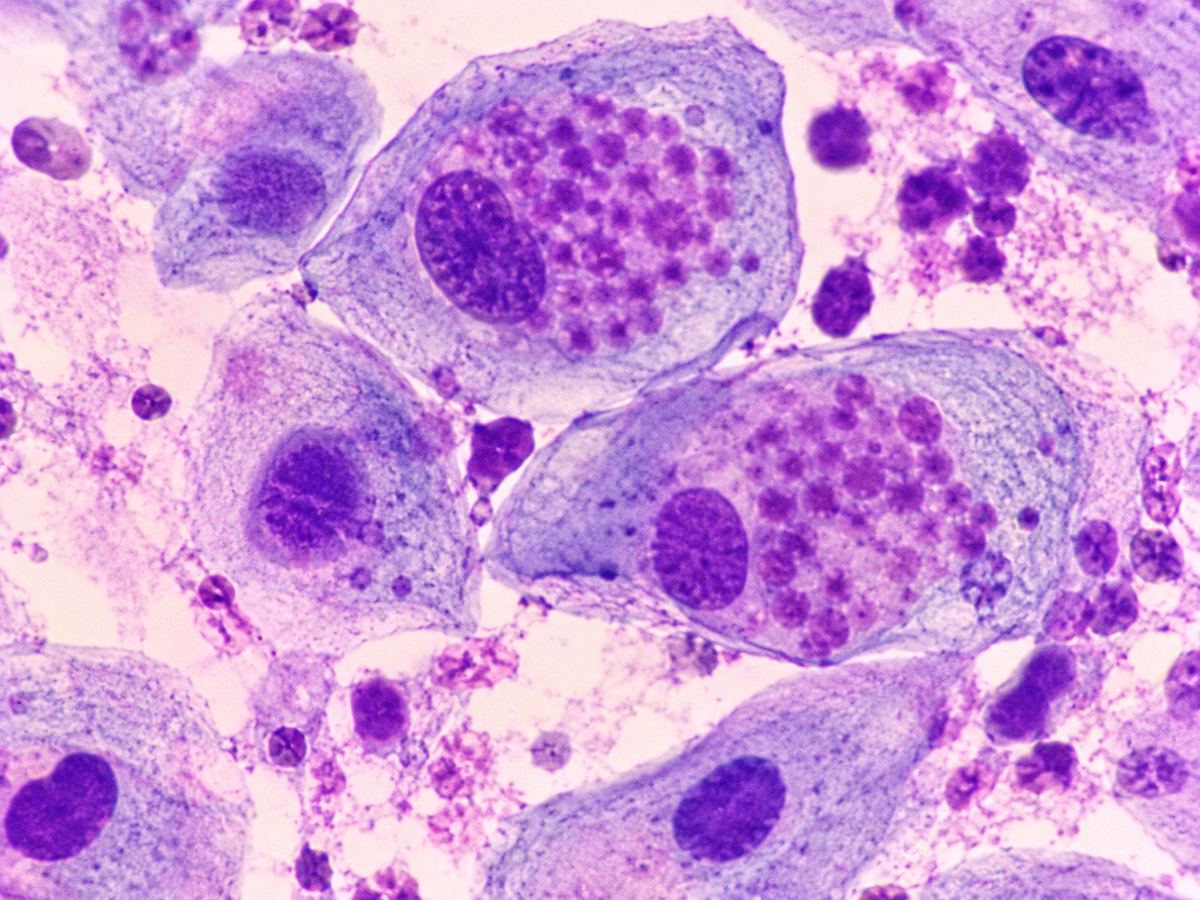
The defining feature of chlamydia is that it has nowhere else to be.
What the research shows
- It lacks the metabolic machinery to generate its own energy supply and must take it from a host cell.
- It cannot be grown on an agar plate the way most bacteria can. It has to be grown in cell culture.
- That limitation is why chlamydia research lagged decades behind work on other bacteria.
- It also means the organism cannot survive long outside the body, so it is not spread by toilet seats, towels or swimming pools.
Why it matters
Every unusual thing about chlamydia, how it hides, how it is tested for, which antibiotics work, follows from it living inside cells.
What's still uncertain
- A few related species infect animals and occasionally people, and the boundaries of the family have been reclassified more than once.
Read more
- CDC: About chlamydiaGovernment
- OwieClear: How chlamydia hijacks cellsOwieClear
Next: Virus or bacterium
A question that took 60 years
What happens
When inclusion bodies were first seen inside cells in 1907, nobody knew what they were.
What the research shows
- Chlamydia is far smaller than typical bacteria and can only reproduce inside cells, which made virus the obvious guess.
- It was classified as a virus for decades and described in textbooks that way.
- It is a bacterium: it has both DNA and RNA, a cell wall of bacterial type, ribosomes, and it divides by binary fission.
- Viruses have only one kind of nucleic acid, no ribosomes, and are assembled rather than divided.
- The reclassification, confirmed through the 1960s and 1970s, is why antibiotics are the treatment.
Why it matters
This is not a historical footnote. Classifying it correctly is the reason chlamydia is curable with a week of tablets.
What's still uncertain
- The family has been reorganized taxonomically several times since, and species names in older literature differ.
Read more
Next: Where it lives
Columnar cells, and where they are
What happens
Chlamydia infects one particular kind of cell, and that explains the list of places it can infect.
What the research shows
- It targets columnar epithelial cells, the tall cells that line the cervix, the urethra, the rectum, the throat and the conjunctiva of the eye.
- It does not infect the tough squamous lining of the vagina, which is why vaginal infection is not the right description.
- Any of those sites can be infected without the others, so a test at one site does not clear the rest.
- Rectal and throat infections are commonly missed because they are not tested for unless someone asks.
Why it matters
If the exposure included oral or anal sex, a urine test alone can miss the infection. Sites have to be tested individually.
What's still uncertain
- How often throat infection leads to onward transmission is not well established.
Read more
- CDC: STI screening recommendationsGovernment
- CDC: About chlamydiaGovernment
Next: The three groups
Serovars, and three different diseases
What happens
The same species causes three distinct illnesses, depending on the strain.
What the research shows
- Serovars D through K cause genital infection: cervicitis, urethritis, proctitis, and the complications that follow.
- Serovars A, B and C cause trachoma, a repeated eye infection that scars the eyelid and is a leading infectious cause of blindness worldwide.
- Serovars L1, L2 and L3 cause lymphogranuloma venereum, LGV, which invades lymph nodes rather than staying on the surface.
- LGV is uncommon in most settings but is seen in outbreaks, particularly as severe proctitis among men who have sex with men.
- The three groups differ in how deeply they invade, not in what kind of organism they are.
Why it matters
Trachoma and a genital chlamydia infection are the same bacterium with different strains, which surprises most people who learn it.
What's still uncertain
- Serovar typing is not done routinely in most clinics, so LGV is sometimes diagnosed from the clinical picture alone.
Read more
- WHO: TrachomaNonprofit
- OwieClear: Lymphogranuloma venereum (LGV)OwieClear
Next: Silent
Why the numbers are what they are
What happens
The most important clinical feature of chlamydia is the absence of symptoms.
What the research shows
- Most infections in women cause no symptoms, and a large share in men cause none either.
- Throat infections are usually silent, and rectal infections frequently are.
- An infection that causes nothing is not treated, and an infection that is not treated keeps being passed on.
- It is also the reason damage accumulates: the infection can persist for months while nothing feels wrong.
Why it matters
Being symptom-free is not evidence of being uninfected. That single sentence is the reason screening exists at all.
What's still uncertain
- Estimates of what fraction of infections are asymptomatic vary with how the population was sampled.
Read more
- CDC: About chlamydiaGovernment
- OwieClear: Why chlamydia screening mattersOwieClear