How gonorrhea invades the linings of the body
Last reviewed November 16, 2026. OwieClear editorial team. Waiting for clinician review. Not medical advice. Talk with your doctor about your own care.
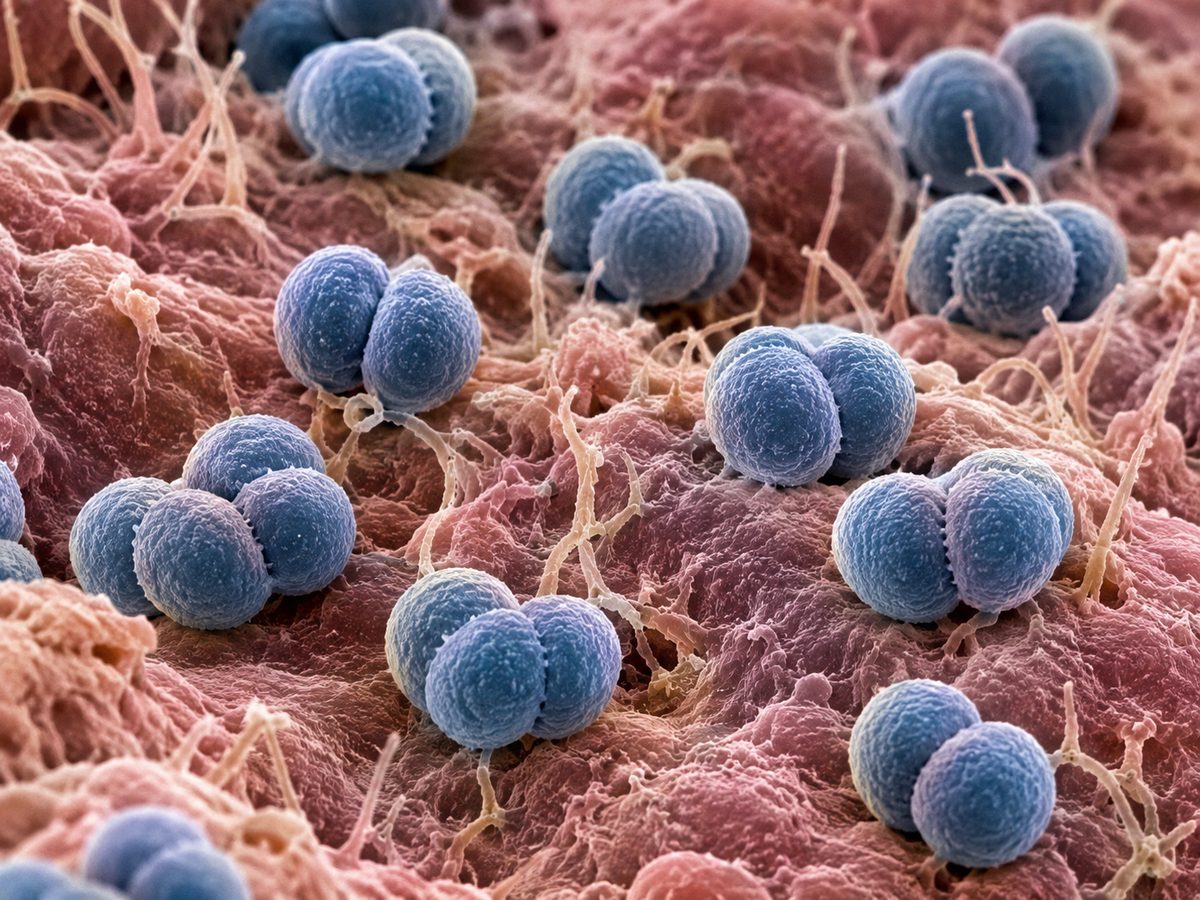
Gonorrhea is caused by Neisseria gonorrhoeae, a bacterium that infects only humans and has no other home in nature. Everything about it is built for one job: staying attached to a wet surface that is constantly being washed away, and getting through it.
Here is how it does that, and why the result is the thick discharge the infection is known for.
Related pages: Gonorrhea
The bottom line
- N. gonorrhoeae is a Gram-negative diplococcus, meaning it grows as pairs of round cells. It infects only humans.
- It attaches using hair-like type IV pili, then binds more tightly using surface proteins that grip human CEACAM receptors.
- It can cross through the lining layer into the tissue beneath.
- The discharge is mostly dead white blood cells, not bacteria.
- Why some infections cause dramatic symptoms and others none at all.
- Why the throat and rectum are so often silent.
The story, step by step
- 1. What it infects (Established microbiology)
- 2. Holding on ()
- 3. Getting in ()
- 4. The pus ()
- 5. The silent sites ()
What the evidence labels mean
A bacterium with one host and a short list of tissues
What happens
N. gonorrhoeae grows only on specific human surfaces: the lining of the urethra, cervix, rectum, throat and the surface of the eye.
What the research shows
- It has no animal or environmental reservoir. Every infection comes from another person.
- It is fragile outside the body and dies quickly on dry surfaces, which is why it isn't caught from toilet seats.
- It prefers columnar and transitional epithelium, which is thinner and more vulnerable than the tough layered skin of the vulva or penis shaft.
- This tissue preference is why infection sits where it does, and why the cervix and urethra are the usual sites.
Why it matters
Because it lives only in people, every chain of transmission runs person to person, which is also why partner treatment actually works to stop it.
What's still uncertain
- The reasons behind its tissue preference are only partly understood.
Read more
- CDC: About gonorrheaGovernment
Next: Holding on
Grappling hooks that pull the bacterium against the cell
What happens
Mucosal surfaces are constantly flushed by urine, mucus and secretions, so the first problem is simply not being washed away.
What the research shows
- The bacterium extends long, thin protein filaments called type IV pili that attach to receptors on human cells.
- The pili then retract, pulling the bacterium tight against the cell surface. They generate some of the strongest pulling forces measured in any bacterium.
- Pili also let the bacterium move across a surface by extending, attaching and pulling, a motion called twitching motility.
- The pilus proteins are also a main target of antibodies, which matters for how the bacterium evades immunity.
Why it matters
This first grip is what allows an infection to establish at all in a place designed to flush things out.
Read more
Next: Getting in
Opa proteins trick the cell into swallowing it
What happens
Once held close, the bacterium binds more tightly with outer membrane proteins.
What the research shows
- Opacity-associated (Opa) proteins and the porin PorB bind receptors on human cells, chiefly the CEACAM family.
- That binding signals the human cell to engulf the bacterium, in effect opening its own door.
- The bacterium can then cross the cell layer and reach the tissue beneath, the submucosa.
- From there it can spread upward into the uterus and tubes, or the epididymis, and in rare cases into the blood.
Why it matters
This is why gonorrhea isn't just a surface infection: the route into deeper tissue is what makes pelvic inflammatory disease and its scarring possible.
What's still uncertain
- Different Opa proteins bind different receptors, and which combinations matter most in people isn't settled.
Read more
Next: The pus
The discharge is your immune system, not the bacteria
What happens
As the bacteria multiply they shed fragments of their outer membrane, including a molecule called lipooligosaccharide (LOS).
What the research shows
- Local immune sensors detect these fragments and sound an alarm within hours.
- Neutrophils, the body's frontline white blood cells, flood into the area in enormous numbers.
- The thick white, yellow or green discharge is made largely of neutrophils, living and dead, along with shed lining cells.
- The burning on urinating comes from this inflammation, not from the bacteria directly.
Why it matters
The symptoms people recognize as gonorrhea are the immune response, which is why the infection can be present with no symptoms if that response is milder.
What's still uncertain
- Why the response is so much stronger in the male urethra than at other sites isn't fully explained.
Read more
- CDC: About gonorrheaGovernment
- OwieClear: How gonorrhea steals iron and blinds your immune systemOwieClear
Next: The silent sites
Why the throat and rectum usually feel like nothing
What happens
Gonorrhea infects the throat and rectum as readily as the genitals, but behaves differently there.
What the research shows
- Most throat and rectal infections cause no symptoms at all.
- They are only found if those sites are specifically tested. A urine test does not detect them.
- The throat is also where the bacterium picks up resistance genes from its harmless relatives living there.
- Untreated silent infections keep transmission going and are a main reason gonorrhea has been so hard to control.
Why it matters
If you have oral or anal sex, asking for those sites to be swabbed is the single most useful thing you can do, because the usual test won't find it.
What's still uncertain
- How often throat infections clear on their own isn't well established.
Read more
- CDC: About gonorrheaGovernment
- OwieClear: The resistance storyOwieClear